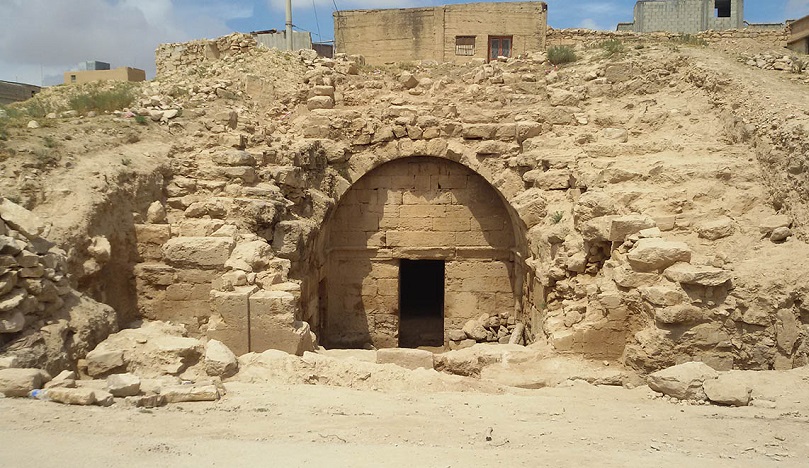
In a quiet family atmosphere begins the visit to Ghawr as Safi, 150 km south of the capital Amman. Here among the southern valleys, just south of the Dead Sea, lives an agri-tourism experience where you can see with your own eyes farms for vegetables, legumes, citrus fruits, tomatoes, perhaps the most important agricultural product in the Jordan Valley. When you visit Ghawr as Safi, we recommend that you stop at the Museum at the Lowest Place on Earth, which includes important archaeological treasures and tells the story of the Jordan Valley through the ages. You can also visit the museum at the Cave of the Prophet Lot, one of the most important historic sites in Jordan, where you can find an ancient church decorated with pillars and mosaic floors.
If you are a lover of sweets looking to learn and have a new experience, you should visit the sugar mills at Ghawr as- Safi. Here you can learn about one of the most important food products in human history, sugar, and discover the historical importance of the sugar economy during the Ayyubid and Mamluk periods. During this time, the Jordan Valley was an important center for the farming, purification, and storage of cane sugar, which was then exported all around the world. Sugar from this area gained international fame during this period, becoming known as “royal sugar.”
The Ghawr as Safi kitchen experience provides you with a unique opportunity to learn about the most popular local dishes in an interactive way. You will learn how to cook your own food from members of the local community after you visit a farm and participate in harvesting. If you are a cyclist, you can rent a bicycle here and take it on a journey to get to know Ghawr as Safi and enjoy the purity of the atmosphere and the amount of oxygen in the air, the highest in the world.
The Jordan Trail is a long distance hiking trail in Jordan connecting the length of Jordan from Um Qais in the north to Aqaba in the south. Offering 40 days of hiking over more than 650 kilometers of trail, and travelling through 52 villages and towns on its way. The trail traverses the diverse landscapes and vistas of the country, from the rolling wooded hills of the north, the rugged wadis and cliffs overlooking the Jordan Rift Valley, the rose rock of Petra, the dramatic sands and towering mountains in Wadi Rum, to the crystal waters of the Red Sea.
As you walk the Jordan Trail, it becomes a journey through the history of Jordan and an encounter with its diverse culture. Travelling the length of the country enables a chance to peel through the different layers of culture, to taste the varied cuisines of Jordan, encounter locals while walking and spending your nights in their home-stays.
It is also an opportunity to learn the history of Jordan, the different civilizations who have made their marks on the land. The trail moves through major historical sites in the region such as Um Qais, Jerash, and Petra, while also harboring hidden ruins resting amongst the land.
The concept of a trail crossing Jordan’s countryside is not a new one. For thousands of years, ancient paths and trade routes have cut across the land that today constitutes the state of Jordan. Jordan was the center of the King’s Highway, a trade route stretching from Egypt to Aqaba, and then north to Damascus.
This route was used by Moabites, Edomites, and Ammonites, but during the first centuries B.C. the Nabatean merchants extended this route further to Asia and southern Arabia making Jordan a center of their empire, with Petra the crown jewel amongst this. After the Nabatean reign, the Roman Empire, continued to utilize these routes as critical pieces of its Middle Eastern network of roads.
Learn traditional papermaking, pottery and more with your family at this renowned center for local training and knowledge.
Iraq Al-Amir was established by Noor Al-Hussein Foundation (NHF) in 1993, in the ottoman part of Iraq Al-Amir. Rich in historical sites dating back to the hellenistic era, the region is also famous for its many springs which turned the valley into a green garden that has become an important tourist attraction.
Iraq Al-Amir Women Cooperative Society has provided training projects for more than (150) women from all villages of Wadi Seer on various handicrafts and it is managed and run by women and ladies who are members of the Society which created many job opportunities for women of all ages.
The Handicrafts Village which is considered a major part of the Society was established in 2001 for the purpose of conserving the region’s environment and preserving its unique architectural heritage. It also helps developing crafty skills to the local women and girls, and gives them a better chance to finding a job and contributing to their society.
The Handicraft Village produces many different products through the different workshops it has:
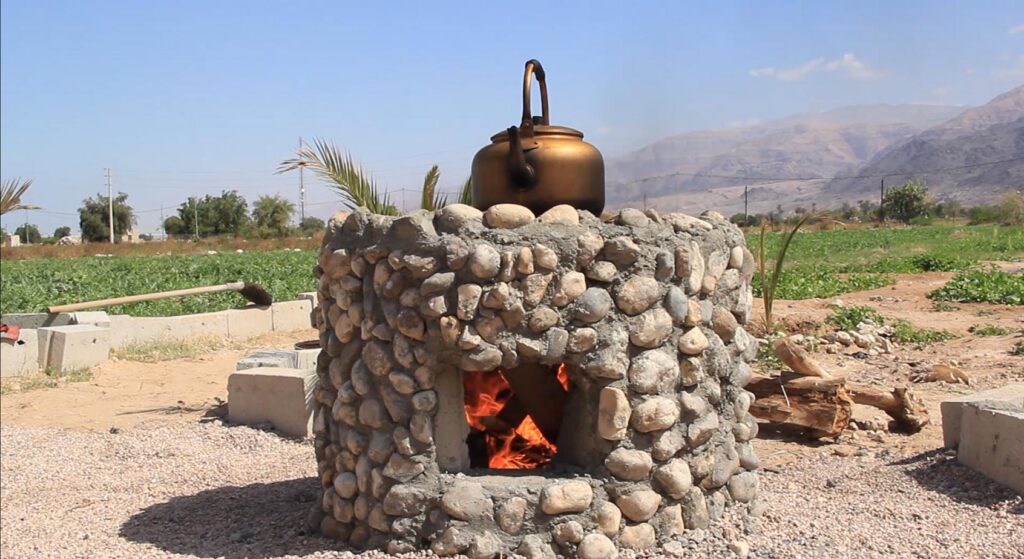
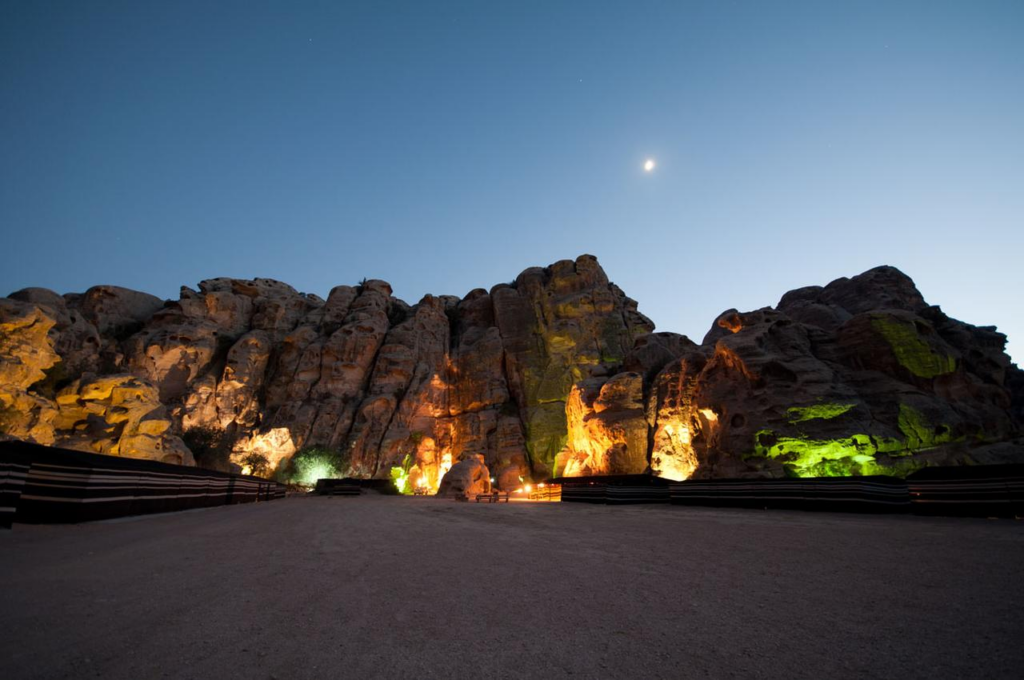
Feynan Ecolodge was constructed in 2005 by the Royal Society for the Conservation of Nature and is the first of its kind in Jordan. In September 2009, EcoHotels took over the management and operation of the lodge, offering travellers an unparalleled opportunity to experience Jordan’s wilderness, meet its native people and explore its ancient history, with minimal impact on the environment.
The concept and design of Feynan Ecolodge was inspired by the historical caravanserai. These were camel caravans taking long journeys across, China, Central Asia, and Europe who would stop and rest at these inns along the silk route, restocking on their supplies and resting before embarking on the next journey. These staging posts were the world’s first global overland network, standing as a testament to the flourishing period of multicultural exchange in the Muslim world; a platform where travellers and pilgrims shared stories, discoveries and knowledge.
When visiting Feynan you will encounter what is arguably one of the last remaining Bedouin communities that continue to live in their traditional lifestyle in Jordan. You will have the rare opportunity to witness human development in the making, urbanisation, and the reality of a traditional culture trying to adapt to the new world.
Tourism has been proven to be a great tool in preserving dying cultures, and although we do not have the right or intend to get in the way of development, your visit to Feynan has revived a strong sense of cultural identity among its small population. They take pride in their culture and heritage and feel honoured to receive guests from around the world eager to learn more about their way of life.
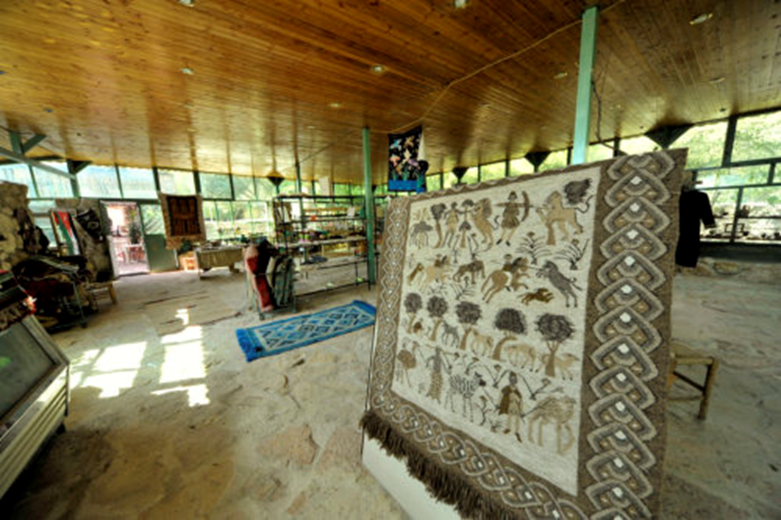
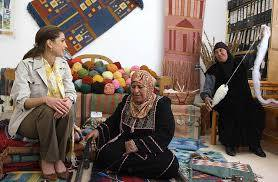
The Bani Hamida Women's Weaving Project, originated by the Save the Children Federation in 1985 and merged into the Jordan River Foundation in 1998, revived traditional Bedouin rug weaving, helping to maintain the social fabric of the Makawir area.
Older women in the community were eager to pass on rug-weaving techniques to younger generations. Today, women in 13 villages keep this tradition alive, while contributing to the betterment of the quality of life of their families.
Using home-made ground looms and wooden spindles, the project rejuvenated the unique warp-faced flat weave in pure wool, along with the colours and particular designs representing Jordan’s unrivalled traditional rug making.
The rugs were an instant hit when they were commercially introduced and have created a unique image for the Bani Hamida Mountain and its women. As the project grew throughout the years, it has become the largest and most famous rug weaving project in Jordan and the neighboring countries.
Since its inception, the project employed 24 full-time employees, benefited over 1650 wage-based women and over 1.5 million Jordanian Dinars have been paid to spinners, weavers and dyers who have produced the superior quality pure wool rugs that travel the world with a “Handmade With Pride by Bedouin Jordanian Women” ticket.
The impact of the project on these women and their community could be clearly seen in their homes, their health and their children’s education who are now able to earn their university degree. Women have become independent, confident and are socially accepted as working women.
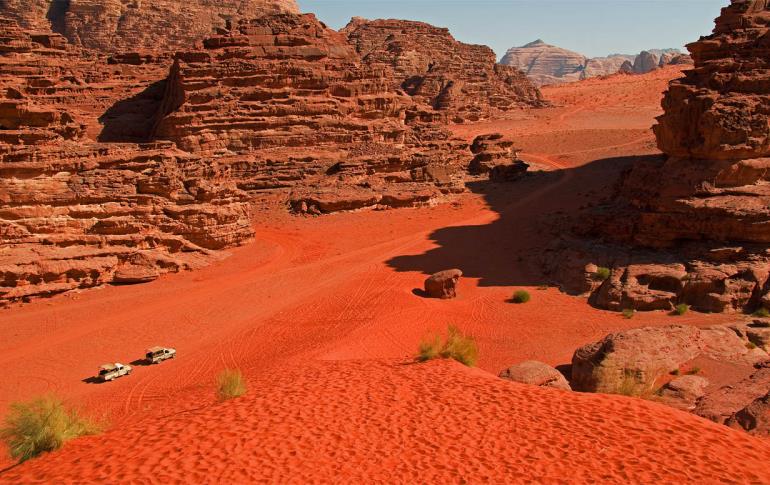
Magic and beauty gather in Wadi Rum, where you will be enchanted by the golden sand and pink mountains until you feel that you are on a planet other than Earth. Rum is located in the south of Jordan, about 320 km from the capital Amman and about 70 km north of Aqaba.
Your experience in Wadi Rum will leave you with the most beautiful of memories that will stay with you forever. The immense quiet of this place, its warm sun, and the experience of spending the night in a Bedouin camp, makes any visit to this place an unforgettable pleasure. Do not forget to take a tour by 4x4 vehicle to discover the area, and then settle in to watch one of the most magnificent sunsets of your life.
The rock formations and caves of Wadi Rum include the largest library of ancient Arabic inscriptions in Jordan, especially the Thamudic calligraphy. Do not miss out on the opportunity to learn about this ancient style of writing, and learn how to write Thamudic yourself from qualified and trained people on the site.
If you are looking for history and authenticity, look no further than Busayra, the ancient capital of the Edomites. This fortified town is located in the Tafila Governorate, in the South of Jordan, about 180 km from the capital Amman. This town has witnessed important historical eras, reaching its peak in the time of the Edomites (who lived in the area at the same time as the Ammonites and the Moabites), some 10,000 years ago, when this kingdom took Busayra as its capital.
The town is made up today of heritage buildings standing alongside modern houses, vineyards, and fig trees that stand beside nearly every home. Its popular markets run along the right- and left-hand sides of the main street that leads through the town straight to the archaeological site.
When you arrive at the archeological area, you will find that there is only one way to access the naturally-fortified site, as it is surrounded by valleys on three of its four sides. The ruins of houses built with thick stone walls and stone-paved floors are still visible in the site today, as is the main well, which provided the residents with their needed water. The guided trail inside the site takes you through a fascinating tour of history. The main educational signs are located with the ruins to the West, so you can enjoy the view of the Dana valley and Sela and Al Maaten valley, impressive scenery that will stimulate your imagination, especially at sunset.
Profile: The Petra Palace is an elegant three-star deluxe hotel offering accommodation, in a relaxing and welcoming atmosphere. We take pride in offering traditional Arabic hospitality and are…





![5[1]](https://www.jitoa.org/wp-content/uploads/elementor/thumbs/51-qh2z2ed26ayrcl4x0xs7zantfjjgldd9n48ns8brh8.jpg "5[1]")
![jordan-trail[1]](https://www.jitoa.org/wp-content/uploads/elementor/thumbs/jordan-trail1-qh2z1jcdwrsapgdz22dj70hlttscjcy4iupmy3lr6k.png "jordan-trail[1]")

![iraq[1]](https://www.jitoa.org/wp-content/uploads/elementor/thumbs/iraq1-qh2z06gs1dxdxqcyzh8xlctmxsh9f3k304sdzpm864.png "iraq[1]")
![f[1]](https://www.jitoa.org/wp-content/uploads/elementor/thumbs/f1-qh2yyny50zur8ck5ttokkqkwhfxz0njngmy85nv270.png "f[1]")

![bani-hamida[1]](https://www.jitoa.org/wp-content/uploads/elementor/thumbs/bani-hamida1-qh2yxsxgrgoal7t7uy9vsgeovq6uyn4icdf7bj51wc.png "bani-hamida[1]")
![287270[1]](https://www.jitoa.org/wp-content/uploads/elementor/thumbs/2872701-qh2yww1449f9av50721xv6pk38p0h8hwjul7iuhty4.jpg "287270[1]")
![bedouin[1]](https://www.jitoa.org/wp-content/uploads/elementor/thumbs/bedouin1-1-qh2yvvdepq12q2m9547hnxykx7pp51gdet59t206os.png "bedouin[1]")
![wadi-rum_770x485-1[1]](https://www.jitoa.org/wp-content/uploads/elementor/thumbs/wadi-rum_770x485-11-qh2ytb983yiz4ac230e1vl7epgbq6paoe57orxsrmk.jpg "wadi-rum_770x485-1[1]")
![busayra[1]](https://www.jitoa.org/wp-content/uploads/elementor/thumbs/busayra1-qh1oy5zeuu8crgptmakmx9050ym6zccy1q8abtyxng.jpg "busayra[1]")